My dear commoners,
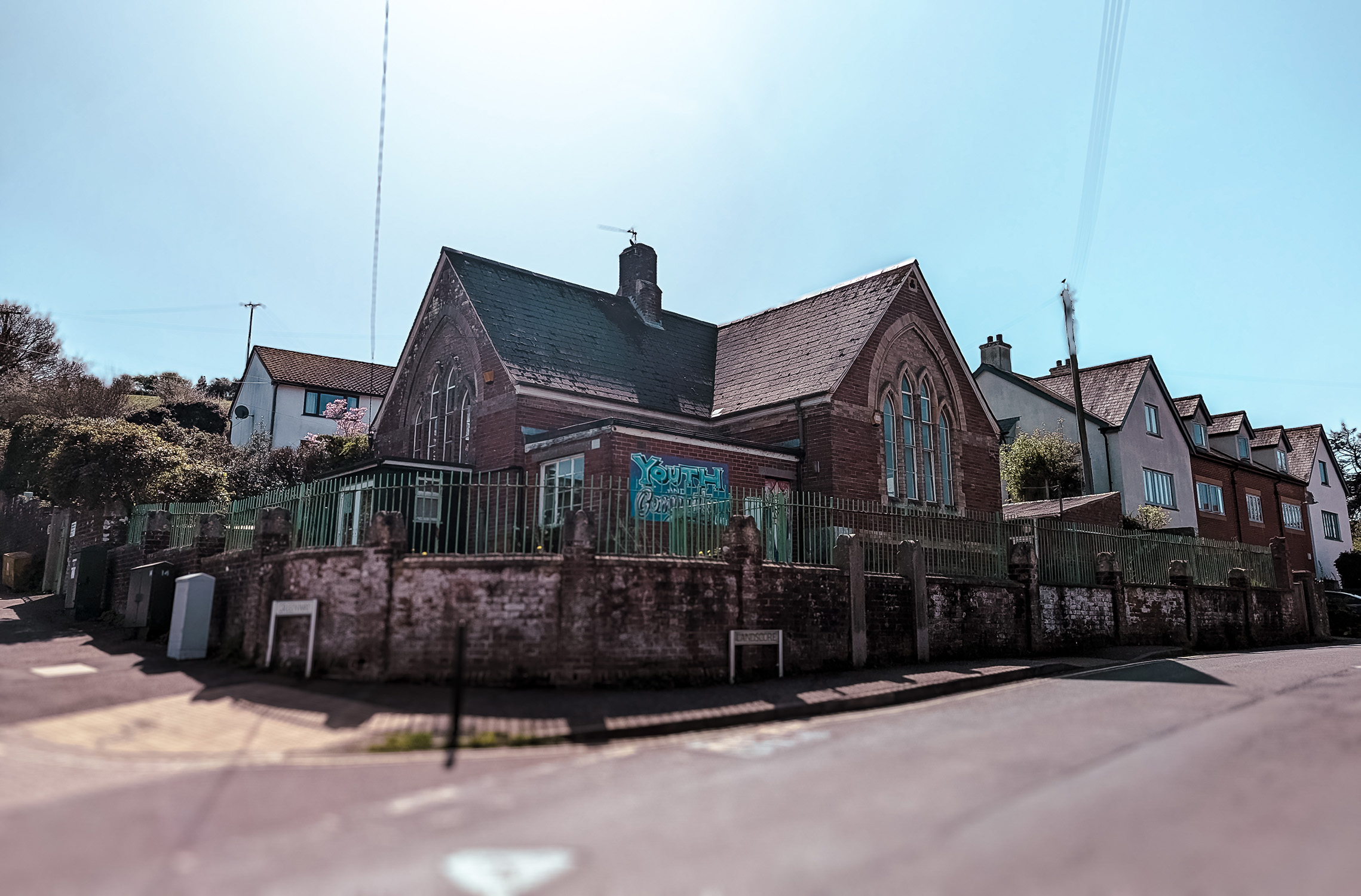
One feels bound to write on the latest specimen of municipal necromancy in our town: the long-abandoned old landscore school building, which, despite being closed, unused, decaying, and about as lively as a boiled lobster, continues to cost the public around £10,000 every year merely by sitting there like a damp accusation.
It is, in its way, one of Crediton’s great civic achievements.
Many buildings, you see, are burdened with the tiresome expectation of being useful. They must house things, serve people, justify themselves, or at the very least refrain from haemorrhaging money while mouldering in full public view. Not this one. This building has transcended all such vulgar expectations. It has become something purer: a shrine to managed uselessness. A monument to the proposition that, if enough dreary little officials take turns fussing around it, a dead building can go on consuming public money long after common sense has been buried.
It no longer educates children, of course. That chapter closed long ago. Its main achievement these days is to sit there producing invoices, reports, insurance costs, and the distinct feeling that one’s council tax might have served the town better had it simply been set on fire for warmth.
Residents occasionally make the touching mistake of looking at the place and asking obvious questions. Could it be sold? Used? Repurposed? Turned into housing, community space, or literally anything involving life, purpose, or human presence? This is always charming to witness. The commoners, for all their mud, carrier bags, and regrettable knitwear, still cling to the quaint belief that when something is broken, derelict, or expensive, the people in charge might eventually be expected to do something about it.
The town council, however, inhabits a higher realm of thought, in which asking a question is merely the opening ceremony for not answering it.
One is told the building is in a “holding position,” which appears to mean it has been placed in formal storage by people too timid to kill it and too useless to revive it. It is not open, not occupied, and not, under any circumstances, allowed the dignity of a final decision. It simply lingers there, locked and slowly decomposing, while the taxpayer is invited to admire the exquisite administrative stillness.
And all the while, the meter ticks on.
Insurance. Water. Maintenance. Security. Bits of spending to justify later spending. Little trickles of money disappear into the structure so that it may continue not functioning in a safe and regulated manner. One rather gets the impression that should the place ever unexpectedly become useful, one has no doubt the town council would treat it as a major emergency and form a working group at once.
But the most magnificent detail, and one that deserves to be framed and hung above the mayoral chair, is this: the town council recently commissioned a £2,000 feasibility report to review a previous feasibility report, only for the outcome to be that the building now requires a new feasibility report.
I do urge you to pause and savour that.
Two thousand sovereigns were cheerfully fed into the furnace so that one report might review a previous report, only to conclude — after the shuffling of papers and priestly murmuring from consultants — that another blessed report must now be commissioned.
This is not administration. It is a séance.
One can imagine the circle of grave local worthies gathered around their meeting table, summoning the ghost of Feasibility Past, only to be informed by the spirits that the ghost of Feasibility Future must also be consulted, at additional cost. Somewhere, no doubt, a consultant adjusted his spectacles, stroked his chin, and declared that before anything can be done, there must first be a fresh and expensive document explaining why nothing can yet be done.
Marvellous. The building may be abandoned, but the paperwork is thriving.
At this rate, the place will never be converted for community use, but it may well become the first building in Devon to be preserved entirely as a cautionary tale. By the time the council has finished commissioning reports into previous reports, the site will contain only a puddle, a pigeon, and someone from the council explaining that all options are still on the table.
And this, naturally, is always presented to the public as prudence.
One can almost hear the dreary little functionaries now. We must proceed carefully. We must not rush. We must consider all options. We must understand the complexities. We must avoid hasty decisions. Yes, yes, splendid. While all this overcooked waffle dribbles on, the building remains empty, the bills continue arriving, and the town goes on funding what is, in essence, a locked shed with a very high opinion of itself.
It would be funny if it were not so beastly. Or rather, it is funny precisely because it is so beastly.
Some buildings are assets. Some are liabilities. This one has become a civic graveyard for public money, where taxpayers’ pounds are laid gently to rest beneath layers of paperwork and insurance premiums. One can picture Crediton parents pointing at it on a dreary afternoon and telling their children, “That, darling, is where ambition goes when it has been handed to a committee.”
And still the thing lumbers on, year after year, confidently unaffordable and heroically useless.
At Houndstone Hall, this sort of piffle would not survive until elevenses. If one of my outbuildings stood empty for years while steadily devouring money, and I paid an extortionate sum of money for a report to review an earlier report only to be told that what I really needed was yet another wretched report, the person responsible would be removed from the estate at such speed his boots would leave scorch marks on the gravel. Perkins, my Labrador, though admittedly stronger on pheasants than property strategy, could grasp within moments that a building must eventually be used or sold — not embalmed in paperwork and fed a diet of public money while councillors murmur reverently about process. Indeed, Perkins has shown more strategic imagination when deciding where to bury a bone.
So let us at least be honest about what this is. It is not regeneration. It is not stewardship. It is not vision. It is not even proper delay, with the decency to look embarrassed. It is the long, expensive worship of indecision by people who mistake paperwork for progress and caution for competence.
The commoners, grubby though they may be, can still recognise a farce when they see one. The building is shut. The costs are real. The excuses are endless. And now, by the grace of local government, we have reached that rare and glorious stage of British public life in which a report has been commissioned to review another report, only to conclude that the true solution is — pop the champagne, Perkins — another report.
Spiffing.